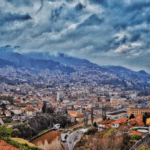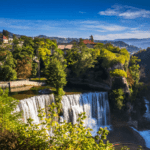
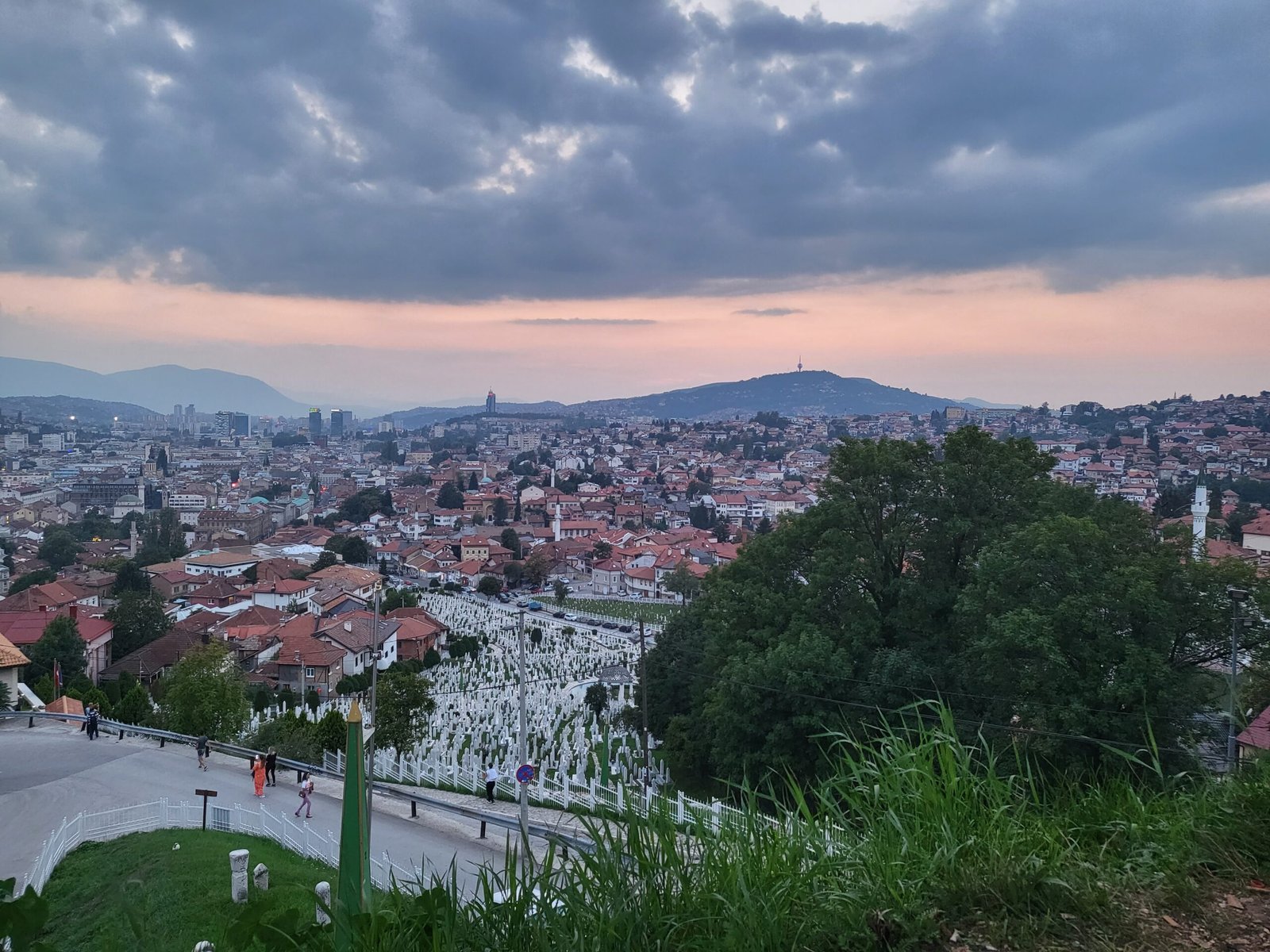
Bosnia and Herzegovina is beautiful and welcoming, with some of the best food you will ever taste. However, from 1992-1995 the country was subjected to a brutal campaign of ethnic cleansing and genocide by Serb and Croat fascists who sought to divide the country between Serbia and Croatia. Nearly 30 years have passed since the end of the war, but Bosnia continues to struggle with the implications of the Bosnian Genocide and an international community whose intervention came too late.
We’ve compiled this list as a guide for people who want to learn more about the Bosnian Genocide. With fascism and right-wing parties once again gaining ground in Europe, it is now more important than ever to learn about the Bosnian Genocide and the dangers of unchecked hate speech and propaganda. ‘Never Again’ isn’t just a hashtag, it is a series of actions we all must take to ensure we educate ourselves about genocide to recognise the signs and do everything in our power to combat them.
Artists
Nermina Memić is a Bosnian illustrator based in Sarajevo, known for ‘Opomena’ (‘Warning’), comprising of 14 illustrations marking the Srebrenica genocide, released monthly on the 11th between 2021–2022. Exhibited at the Srebrenica-Potočari Memorial Center and in Germany and the UK, the series honours victims through both direct depictions of July 1995 and symbolic imagery, such as a flower formed from 8,372 points representing those killed. Nermina describes the work as a stand against denial, a way of keeping memory alive where words fall short, and a warning for future generations.
Nermina very kindly shared a poem written by her mother in 1993, just two days after Srebrenica was declared a UN Safe Area. Nermina’s mother Senada foresaw that genocide would take place. You can read the poem at our event commemorating the Srebrenica and wider Bosnian Genocide.
You can follow her on Instagram.
Books
The Last Refuge – Hasan Nuhanovic – ‘We went to the mountains of eastern Bosnia to hide from the war. As if a forest could shield you from a war. The war flies, reaches you in a second. It runs through the walls, over the mountains and rivers. It enters your mind, your heart and your soul and refuses to leave . . .’
The Cat I Never Named by Amra Sabic-el-Rayess – ‘The heavy snow that blankets the earth and surrounding hills looks so clean, so innocent. You might think the war had never happened. But I know the snow hides bombed buildings and cratered roads. It covers mass graves. There is blood in the earth under all that frozen beauty. You can hide the past, cover it up with snow or lies or years, but those who were there do not forget.”
The Bosnia List by Kenan Trebincevic and Susan Shapiro – ‘In reality, there was no happy ending. There was not even a clear military defence that we could mourn and start to recover from. The war was an open-ended, ongoing disaster, with no point, no positive outcome, no conclusive wisdom, no closure. But I couldn’t settle for that unsatisfying stalemate.’
Our Bodies Their Battlefield by Christina Lamb – “Around the world, a woman’s body is still very much a battlefield and hundreds of thousands of women bear the invisible wounds of war.”
Unfinest hour: Britain and the destruction of Bosnia by Brendan Simms – ‘Britain was alone in opposing the idea of armed intervention to safeguard the passage of humanitarian aid in the Bosnian conflict…Britain abstained on a UN General Assembly resolution in December 1992 comparing ethnic cleansing to genocide and opposed a similar motion at a session of the UN Human Rights Commission’.
Slaughterhouse: Bosnia and the failure of the West by David Rieff – “After Sarajevo, after Srebrenica, we know what “Never again!” means. “Never again’’ simply means “Never again’’ will Germans kill Jews in Europe in the 1940’s. That is all it means.”
Movies
Quo Vadis Aida (2020) is an internationally co-produced war drama written and directed by Jasmila Žbanić, based on Hasan Nuhanović’s book Under the UN Flag. It dramatizes the July 1995 Srebrenica massacre, following Aida Selmanagić, a UN translator desperately trying to save her husband and two sons as Bosnian Serb forces under General Ratko Mladić close in. The film premiered in the main competition at the 77th Venice International Film Festival.
Charities
Bosnian Genocide Educational Trust (BGET)
BGET humanises history by turning statistics into personal survivor stories, teaching that peace requires everyday action, not just the absence of war. Inspired by South Africa’s Truth and Reconciliation Commission, they aim to build a lasting archive of Bosnian Genocide testimony and artefacts, particularly from refugees who arrived in the UK, to educate future generations and inspire empathy and acts of kindness today.
Beyond Srebrenica coordinates Srebrenica awareness activities in Scotland, commemorations and the Scottish Schools programme. It also fundraises and manages the “Lessons of Srebrenica” programme in Scotland.
The ‘Forgotten Children of War’ Association was founded in 2015 by a group of human rights activists and children born due to war from Bosnia and Herzegovina. The ‘Forgotten Children of War’ Association is the first and currently the only organization in the world that is founded and led by children born due to war. It approaches the issue from a completely different perspective, working to achieve both the legal and social visibility of these children. It is the first to advocate for their recognition and gather members from the categories mentioned above.
The Acts of Reburial is a documentary in development, directed by Bosnian filmmaker Harun Mehmedinović, examining how sites of the Bosnian Genocide continue to be denied or erased decades on. Through survivor testimony, it confronts denial as an ongoing extension of the crime. The project is currently fundraising and open to volunteers and partners.
SniperAlley aims to find, identify, and archive photographs taken during the siege of Sarajevo, crediting the photographers, some of whom lost their lives, who documented the war for the world to see. It also seeks to trace children from iconic war photographs to learn how their lives unfolded afterward. Built on survivor testimony and untold stories, the site invites contributions of photos, stories, and questions from anyone connected to that history.
Što Te Nema (‘Why Are You Not Here?’) began in 2006 as a nomadic monument by artist Aida Šehović, where communities worldwide filled Bosnian coffee cups and left them undrunk each 11 July to mourn those killed at Srebrenica. Now a registered nonprofit with the monument permanently housed at the Srebrenica Memorial Center, the organisation continues through exhibitions, a feature documentary, and educational programmes on genocide awareness.
Social Media
Survivor Narratives
Sarajevo
- Is genocide a flavour of Gatorade? – Aida Mandić
- It’s very sad to see history repeating itself, we never learn any lessons – Ada Jusic
- Refugees are seen either as criminals or saints. – Danica Mračević
Srebrenica
- I want people to embrace Srebrenica as a lesson about the dangers of ultra-nationalism – Alma Mustafić
- It’s our victory to come back to Srebrenica – Ahmed E. Hrustanović
- Genocide is happening now – Jasmin Jusuf Jusufović
Banja Luka
- That’s where you feel the ethnic cleansing, in the silence – Adnan Mahmutovic
Zenica
Prijedor
Mostar
- Peace is the only alternative – learning about concentration camps and the siege of Mostar with Emir Hajdarovic
- Peace isn’t the absence of war, it’s the steps we take to stop war – Smajo Bešo
Stolac
- Humanism is something we need to share – Demir Mahmutćehajić
Podcasts
More Than A Statistic by Our World Too
- Raising Awareness about the Bosnian Genocide with Georgio Konstandi
- Using storytelling to amplify the voices of refugees and raise awareness about the Bosnian Genocide with Emlyn Pearce and Smajo Bešo
- Discussing the mental health impacts of surviving displacement, war, and genocide with Selma Bacevac.
- Surviving the Srebrenica Genocide: Holding the Dutch state responsible and raising awareness about genocide through theatre with Alma Mustafić.
- Voices from the Drina: Discussing what social media newsfeeds would have looked like during the Bosnian Genocide with Georgio Konstandi.
- Exploring identity, memory, and resilience in the Bosnian Diaspora with Berina Smajlovic and Lamija Hodzic
Untold Killings by Remembering Srebrenica
Srebrenica Stories by Beyond Srebrenica